
Walking at night safety tips Las Vegas starts with calm, practical habits that fit everyday routines.
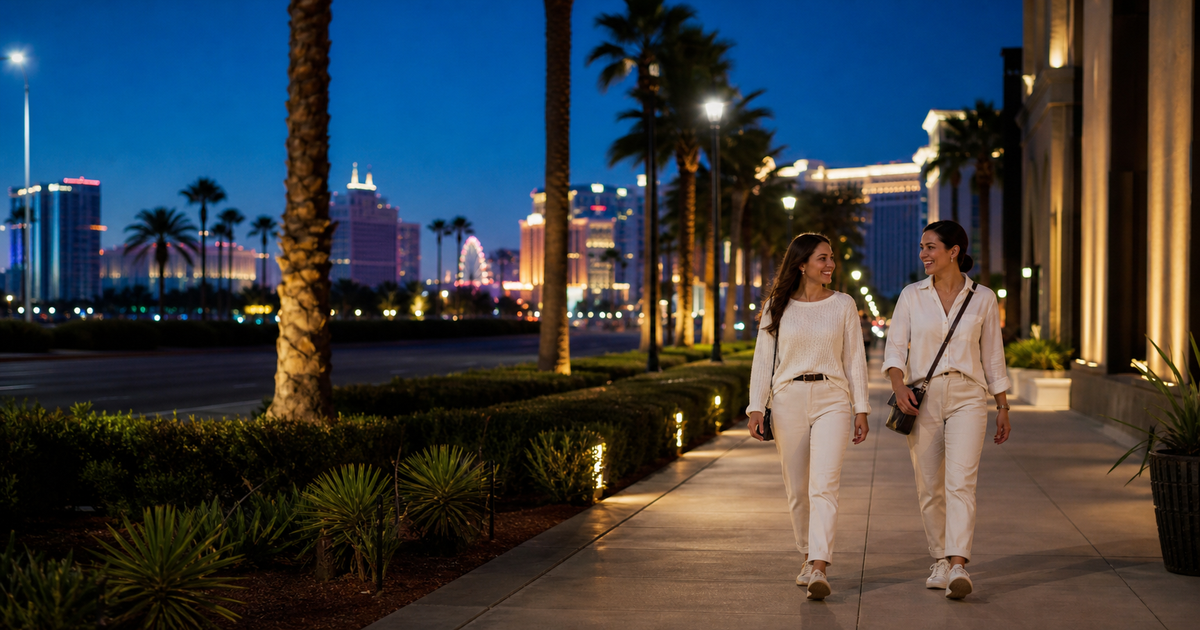
Las Vegas stays active long after sunset. Visitors may be walking between hotels, restaurants, entertainment venues, rideshare areas, and parking garages, while locals may be leaving work, meeting friends, running errands, or returning to their vehicles after an evening out.
Walking after dark does not need to feel intimidating. The most useful walking at night safety tips Las Vegas visitors and locals can practice are based on awareness, planning, and simple routines. Knowing where you are going, using designated pedestrian routes, limiting distractions, and noticing changes in your surroundings can help you make more confident decisions.
The goal is not to assume every nighttime situation is risky. It is to build safety-conscious routines that feel natural enough to use every day.
Is It Different Walking in Las Vegas at Night?
Las Vegas has a unique nighttime environment. Entertainment areas can remain crowded late into the evening, while parking structures, side streets, residential areas, and spaces away from major activity may become quieter.
That means conditions can change quickly during a relatively short walk. A busy hotel lobby might connect to a quieter garage. A crowded entertainment district might give way to a less active street several blocks away.
Strong situational awareness Las Vegas residents and visitors can practice begins with noticing those transitions rather than treating every area the same.
The City of Las Vegas continues to focus on pedestrian safety through its Vision Zero efforts, with an updated action plan aimed at reducing serious and fatal traffic incidents. For people walking at night, vehicle awareness should be considered alongside general personal safety.
Walking at Night Safety Tips Las Vegas: Know Your Route
One of the simplest late night safety tips Las Vegas visitors can follow is deciding where they are going before they leave a building.
Check the general route to your hotel, vehicle, restaurant, event, or transportation area while you are still somewhere comfortable and populated. This reduces the need to repeatedly stop and study your phone while walking.
Large Las Vegas resorts and entertainment properties may have multiple entrances, pedestrian bridges, parking areas, and transportation zones. A destination that looks close geographically may require a different pedestrian route than expected.
If you are staying at a hotel and are unsure about the surrounding area, the Las Vegas Metropolitan Police Department specifically recommends asking the front desk about places to walk, eat, shop, or jog. Planning does not need to be complicated. Knowing the first few steps of your route can make the entire walk easier.
2. Use Sidewalks and Designated Crossings
Night walking awareness also means paying close attention to traffic. Use sidewalks or pedestrian pathways when they are available, and cross streets at designated locations rather than choosing the shortest possible route across traffic.
City of Las Vegas pedestrian guidance encourages people to use sidewalks or pathways, stay attentive to motorists, and cross where drivers expect to see pedestrians. Crosswalk markings are specifically used to identify preferred crossing locations for pedestrians and motorists.
At night, vehicle headlights, traffic patterns, turning vehicles, and busy intersections can all compete for your attention. Make eye contact with the roadway, follow pedestrian signals, and avoid assuming a driver has seen you simply because you have the right of way. These habits are part of practical safety habits that apply to residents and visitors alike.
3. Limit Phone Distractions While You Walk
Phones are valuable travel tools, but they can also take attention away from the environment. Looking down at directions, responding to messages, scrolling through social media, or searching for a rideshare while walking can make it harder to notice traffic signals, vehicles, people, entrances, or changes around you.
Before leaving a hotel, restaurant, workplace, or entertainment venue, check your route. If you need to use your phone again, consider stopping in a populated area rather than continuing to walk while focused on the screen.
This does not mean putting your phone away completely. Keep it accessible for communication and navigation. The goal is simply to prevent it from becoming your entire focus. Reducing distractions is one of the most practical situational awareness tips because it requires no special equipment and can become an everyday habit.
4. Pay Attention When Moving From Busy Areas to Quiet Ones
Las Vegas can change quickly from crowded to quiet. You may leave a busy restaurant and enter a less active parking area. A large convention may end, sending crowds in several different directions. A resort corridor may be busy while a nearby side street has considerably less activity.
Train yourself to notice that change. Before entering a quieter environment, look ahead and confirm that you understand where you are going. If you realize the route is different from what you expected, take a moment to reconsider it.
You can return to a staffed business, hotel lobby, event venue, or other populated location to check directions or choose another transportation option. This approach supports personal safety awareness without treating quieter spaces as automatically unsafe.
5. Choose Visibility Over Shortcuts
A shorter route is not always the most convenient route at night. When practical, choose sidewalks, established pedestrian routes, well-used areas, and locations with better visibility instead of cutting through unfamiliar lots, alleys, isolated areas, or spaces where your surroundings are difficult to see.
Visibility is particularly important around vehicles. The Las Vegas Metropolitan Police Department recommends parking in well-lighted locations near sidewalks or walkways and avoiding places where large vehicles or other objects significantly limit visibility. The same principle can help when you are walking back to a parked vehicle.
A few additional minutes on a familiar, established route may be more comfortable than navigating an unfamiliar shortcut.
6. Develop Better Parking Lot Awareness
Parking lots and garages deserve their own safety-conscious routines, especially after dark. Remember where you parked before entering a venue. Take a picture of the level, section, or nearby sign if necessary. Have your keys accessible before you reach the vehicle rather than stopping beside the car to search through a bag.
As you walk, periodically look around instead of focusing only on finding your vehicle. When you approach the car, notice the immediate area around it before getting inside. If you cannot locate your vehicle or feel uncomfortable continuing through the garage, return to a staffed location and ask for help when that option is available.
These parking lot awareness tips are useful for locals leaving work, visitors returning from events, and anyone using large Las Vegas parking structures.
7. Decide on Rideshare Transportation Before You Need It
Sometimes the better nighttime plan is not to walk the entire distance. If your destination is farther than expected, your route is unfamiliar, or you simply prefer transportation, make that decision while you are still at a hotel, restaurant, event venue, or other staffed location.
When using a rideshare, find the designated pickup area and verify the vehicle before entering. Harry Reid International Airport, for example, uses clearly designated rideshare pickup areas, reinforcing the value of meeting transportation in established locations.
The same general habit can be useful at hotels, convention centers, and entertainment properties. Combining rideshare safety tips in Las Vegas with good walking habits gives you more than one option for getting where you need to go.
8. Keep Headphone Volume Low Enough to Stay Aware
Music, podcasts, and phone calls can make a walk more enjoyable, but they should not completely remove your ability to hear the environment. If you use headphones while walking at night, consider keeping the volume low enough to hear nearby traffic, horns, announcements, approaching vehicles, and other environmental sounds.
Situational awareness works through more than vision. Sound can provide useful information about what is happening around you. This is a small adjustment, but it fits naturally into everyday safety awareness and does not require changing your entire routine.
9. Have a Simple Plan When Walking Alone
Walking alone does not require a completely different mindset, but a little preparation can be useful.
Know where you are going, keep your phone charged, and consider letting someone you trust know your general plans when appropriate. Visitors can share the name of their hotel or destination. Locals leaving work late can develop a simple check-in routine with family, friends, or coworkers if that fits their circumstances.
These habits support solo travel awareness and complement broader solo travel safety tips that visitors may already use during a trip. Communication is not about having someone monitor every movement. It simply keeps another option available.
10. Recognize When Changing Your Plan Makes Sense
One of the most important awareness habits is remembering that your original plan does not have to remain your final plan. If you start walking and realize the route is longer, quieter, hotter, more crowded, or more confusing than expected, you can change direction.
Return to the hotel. Step into a staffed business. Request transportation. Meet someone at a different location. Ask venue staff for guidance. You do not need to prove that something is wrong before making a reasonable adjustment. Confidence and personal safety often come from recognizing that you have choices.
11. Account for Las Vegas Weather
Nighttime can bring relief from daytime heat, but desert conditions still deserve attention. Before planning a long walk, check current conditions and consider how much of the route will be outside. Carry water when appropriate and remember that distances between large properties may feel longer on foot than they appear on a map.
Environmental awareness is part of travel safety Las Vegas visitors should consider alongside transportation and personal awareness. For locals, the same principle applies to errands, exercise, commuting, or walking between destinations after dark.
12. Know Where You Can Ask for Help
You do not need to memorize every police station or security desk. Simply notice staffed locations while you move through an area.
Hotel front desks, venue employees, security personnel, transportation staff, and open businesses can be useful resources if you become lost, cannot locate your vehicle, or need help determining your next step.
The Las Vegas Metropolitan Police Department maintains tourist safety resources specifically for people visiting Las Vegas. Knowing that help is available can make it easier to make calm decisions instead of continuing along a route you no longer understand.
Walking at Night Safety Checklist for Las Vegas
Before heading out after dark, consider a quick mental checklist:
Do I know where I am going?
Have I checked the route before I start walking?
Am I using sidewalks and designated crossings?
Is my phone charged and accessible?
Am I limiting unnecessary phone distractions?
Can I still hear traffic and activity around me?
Do I know where I parked or where my rideshare pickup point is?
Have I noticed when the environment changes from busy to quiet?
Do I know where I could ask for assistance if needed?
Am I comfortable changing my plan if circumstances change?
These questions help turn late-night safety tips for Las Vegas residents and visitors into simple, practical habits that are easy to follow.
Frequently Asked Questions About Walking at Night in Las Vegas
What are the most important walking at night safety tips in Las Vegas?
Know your route, use sidewalks and designated crossings, minimize distractions, stay aware of traffic, choose visible and well-used routes when practical, and have another transportation option available.
How can visitors find an appropriate walking route from their hotel?
Ask hotel staff about surrounding walking routes and destinations, particularly if you are unfamiliar with the property or neighborhood. Las Vegas Metropolitan Police Department specifically recommends asking the hotel front desk about appropriate places to walk.
Should I walk or take a rideshare at night in Las Vegas?
That depends on the distance, conditions, route, and your own comfort level. If a walk is longer or less familiar than expected, choosing transportation is a reasonable alternative.
How can I stay aware without becoming anxious?
Focus on practical information rather than trying to predict threats. Know where you are, where you are headed, what is happening around you, and whether conditions have meaningfully changed.
Build Safety-Conscious Routines That Fit Everyday Life
The best walking at night safety tips Las Vegas visitors and locals can practice are usually the simplest. Plan your route before leaving. Use sidewalks and established crossings. Look up from your phone. Notice transitions between crowded and quieter areas. Keep transportation options available. Stay aware around parking areas and vehicles. Give yourself permission to change your plans.
These are not fear-based rules. They are safety-conscious routines designed to make awareness feel like a normal part of everyday life.
Belt Buddy Pro is a Las Vegas personal safety company whose broader messaging emphasizes practical everyday confidence, personal safety awareness Las Vegas, responsible preparation, and situational awareness tips. As a local safety brand in Las Vegas, Belt Buddy Pro supports awareness-focused education for work, travel, and everyday routines.
Walking after dark should not require constantly looking for problems. A clear route, reasonable attention, good pedestrian habits, and a few practical options can help visitors and locals move through Las Vegas with greater confidence and awareness.
For additional context, review pedestrian safety guidance from the linked authoritative source.